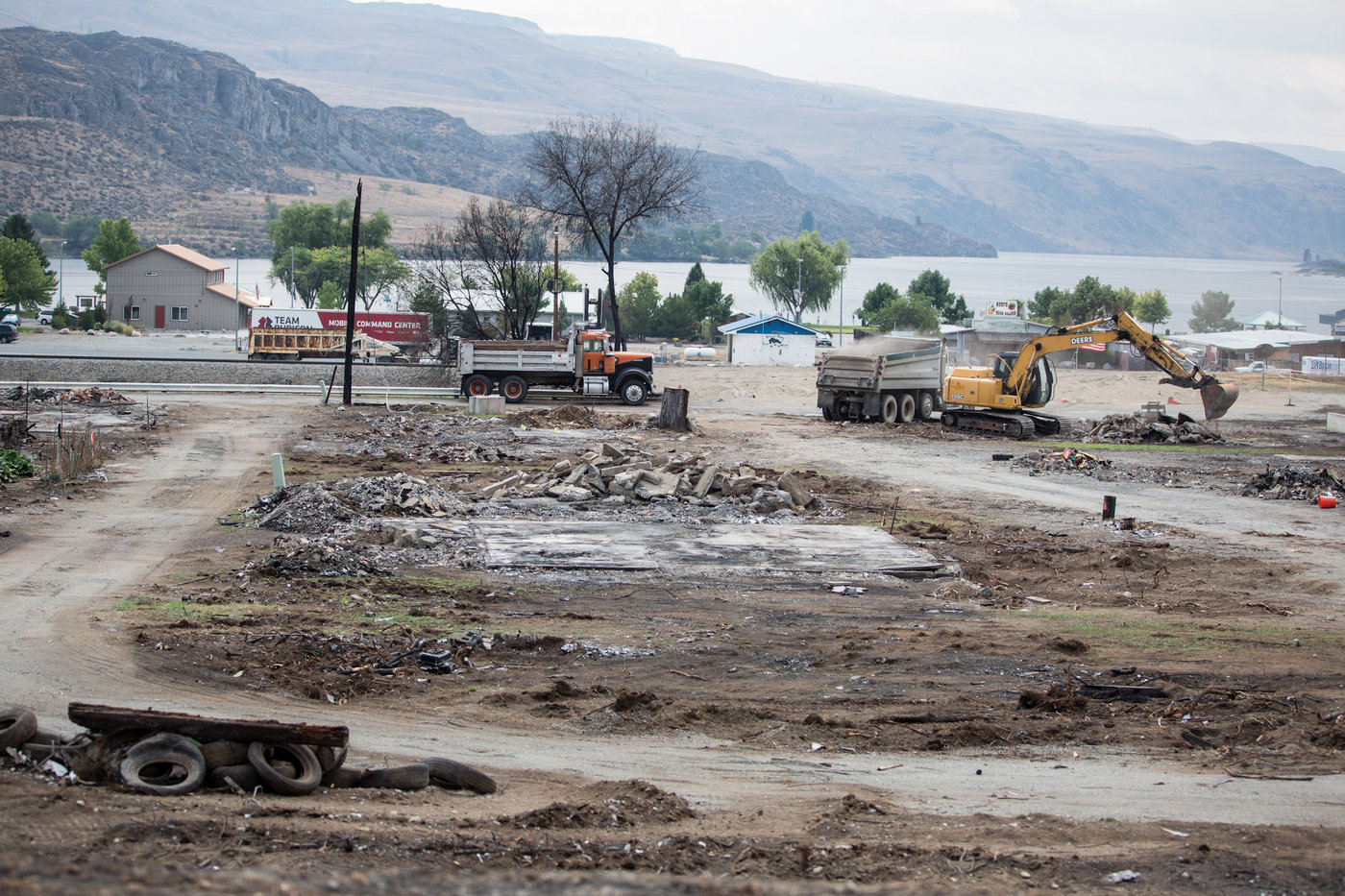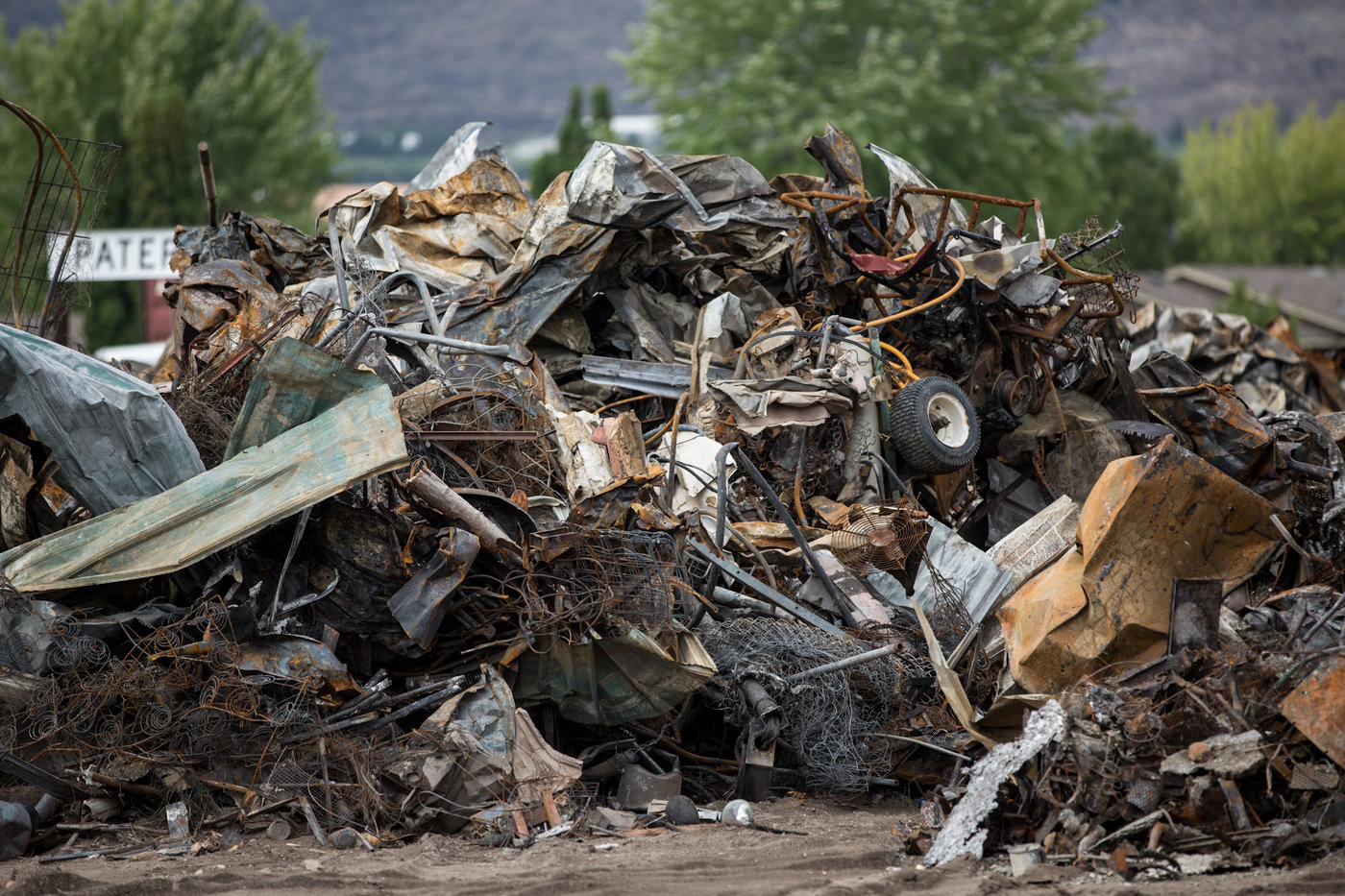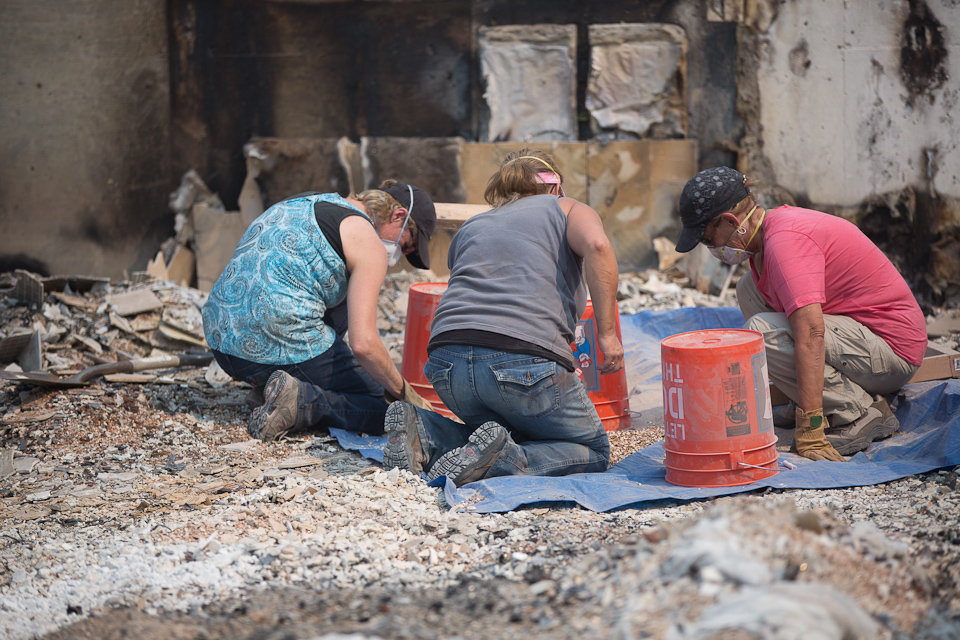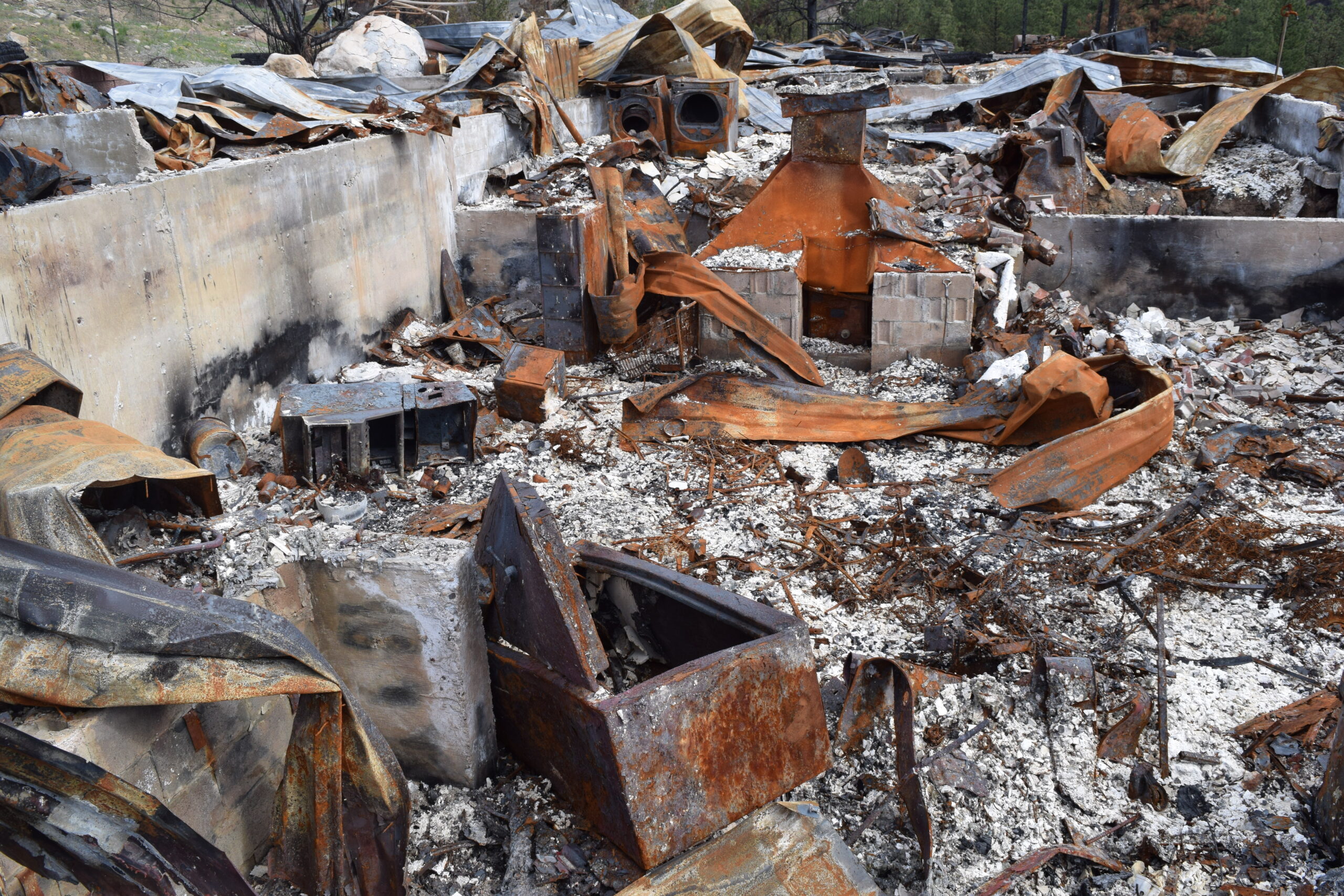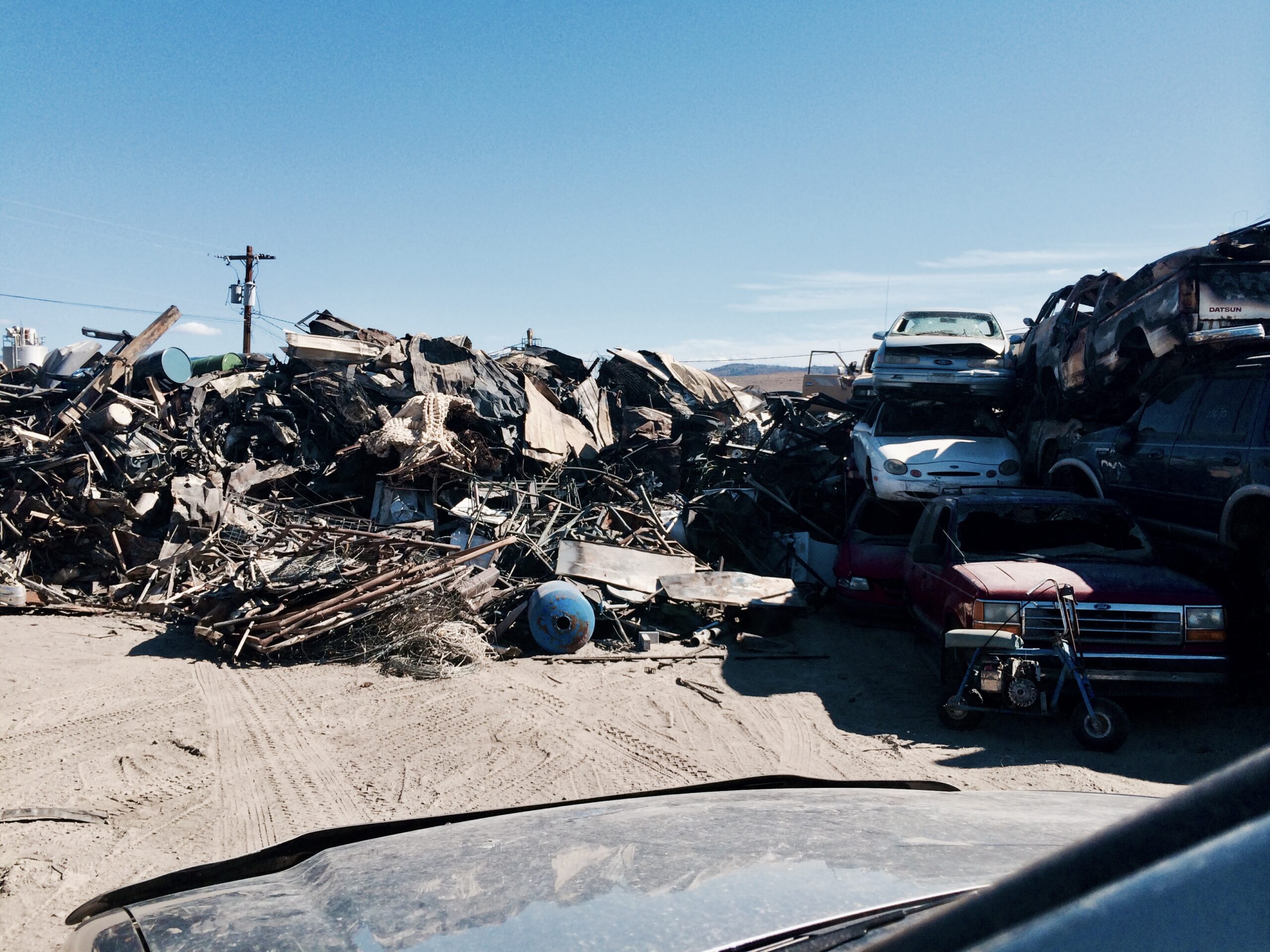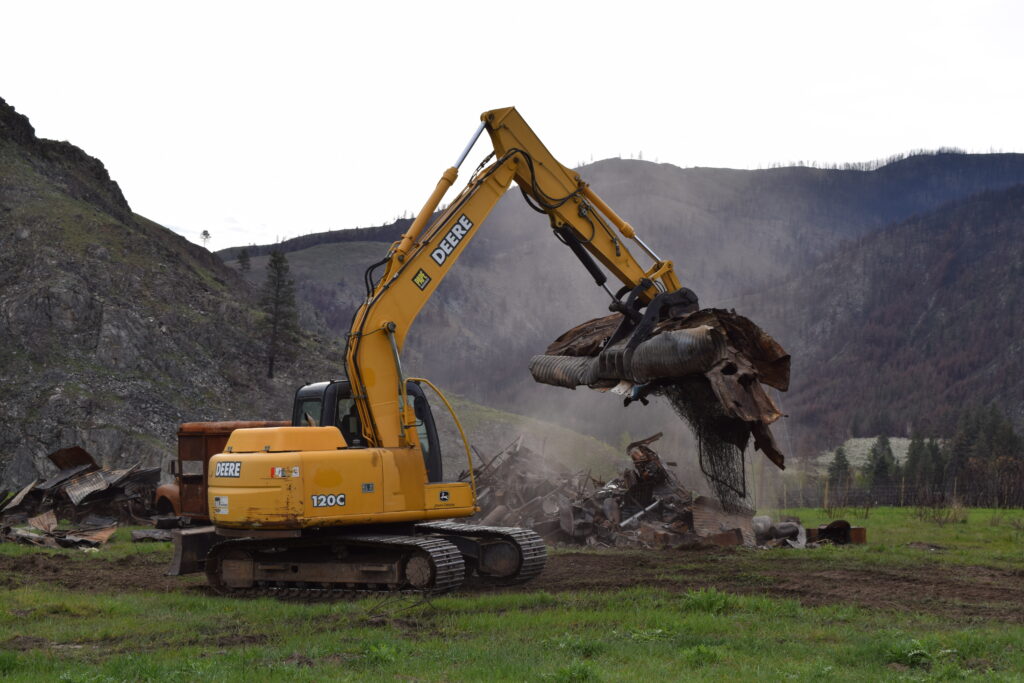
Debris removal involves a multi-faceted process to safely remove and dispose of hazardous materials and debris from burned properties. This process typically includes assessment, removal of household hazardous waste, and then the removal of remaining debris and contaminated soil. Debris removal is generally managed by both government-managed and private contractors. Often times, jurisdictional assistance is provided for more complete, safe, and coordinated debris removal.
Key Tips:
- Debris removal is expensive and time consuming, plan accordingly.
- Paid contractors must be properly vetted, watch out for scams.
- The final destination of debris needs to be an environmentally appropriate and legal location. After the Grey and Oregon Road Fires of 2021, a contracted debris removal company was identified as illegally dumping and burying waste.
Example:
Team Rubicon assisted the City of Pateros with its debris removal down to the foundations. The foundations were later removed, piled, crushed and used in the City’s sidewalk project. 75% of the costs were paid by the FEMA Public Assistance Grant Program, with a 12.5% match from the State of Washington, 12.5% from the City, and “in-kind” matches from community volunteers and donors. Memorial plaques were put into the sidewalks reflecting the use of survivor home foundations.
Resources
- After the Fire WA: Debris Cleanup Resources
- Burrito Wrapping Debris
- How to Handle Debris Removal After House Fire
- Recovery Guide to Wildfire Debris Removal